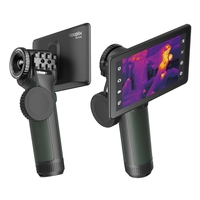
Thermal Handhelds
What Are Thermal Handhelds and How Do They Work?
Thermal handhelds are compact thermal imaging devices designed to help you detect people, wildlife and other heat-emitting subjects during the day or after dark. Often called thermal monoculars, handheld thermal cameras or thermal viewers, they are particularly useful when conventional optics struggle, such as at dusk, at night, in dense vegetation or when an animal blends naturally into its surroundings.
Unlike standard binoculars, which rely on visible light, a thermal handheld detects differences in infrared energy. The thermal sensor translates these temperature differences into an image on an internal digital display. Warmer and cooler areas are shown using contrasting shades or colours, making a heat source much easier to pick out against grass, woodland, hedgerows and other backgrounds.
For wildlife watchers and birders, this makes thermal imaging an excellent detection tool. You might use a thermal handheld to scan a woodland edge at dawn, locate a mammal moving through long grass or find roosting wildlife without having to search every part of the landscape through high-magnification optics. Once you know where the subject is, you can switch to binoculars or a spotting scope for a more detailed conventional view when light levels allow.
Thermal handhelds are also valuable for land management, field observation and professional outdoor work. Their ability to detect temperature differences rather than visible colour means they can reveal subjects that would otherwise be difficult to notice, although thermal imaging should always be treated as a detection and observation aid rather than a substitute for positive identification.
How to Choose the Right Thermal Handhelds for Your Needs
Choosing the best thermal handheld involves balancing image quality, field of view, magnification, thermal sensitivity, lens specification, size, weight and battery performance. A model intended for scanning nearby woodland will benefit from different characteristics to a thermal monocular designed for observing animals across large open areas.
Thermal Sensor Resolution
The thermal sensor is one of the most important components in any handheld thermal imager. Its resolution determines how much thermal information the device can capture, with higher-resolution sensors generally producing a more detailed image.
Extra resolution becomes particularly useful when you are observing small subjects, trying to distinguish between several heat sources or working at greater distances. For casual wildlife watching at relatively short ranges, maximum sensor resolution may not be essential, whereas regular users and professionals are more likely to appreciate the additional detail of a higher-resolution thermal detector.
It is important not to judge thermal image quality from resolution alone. Sensor sensitivity, the objective lens, display quality and the manufacturer's image processing all influence what you actually see through the eyepiece or on the screen.
Thermal Sensitivity and NETD
You may see a specification called NETD when comparing thermal handhelds. This stands for Noise Equivalent Temperature Difference and is a measure of how effectively the thermal sensor can distinguish very small differences in temperature.
In general, a lower NETD figure indicates greater thermal sensitivity. This can become especially useful when environmental conditions reduce the temperature difference between wildlife and its surroundings. Instead of simply displaying a bright heat source against an indistinct background, a sensitive thermal sensor can help reveal more of the surrounding terrain and vegetation.
Objective Lens and Field of View
Lens focal length has a major influence on how a thermal monocular feels in practical use. Shorter focal lengths generally provide a wider field of view, which makes them particularly useful for quickly scanning woodland, hedgerows, gardens and nearby fields.
A longer focal length tends to provide greater base magnification and is therefore better suited to subjects farther away. The trade-off is a narrower field of view, so it can take more movement of the handheld to search a large area.
For birdwatching, nature observation and general wildlife spotting, field of view deserves particular attention. A thermal handheld may have impressive long-range specifications, but a very narrow view can make it unnecessarily difficult to locate smaller or fast-moving animals at closer distances.
Base Magnification and Digital Zoom
Thermal monocular magnification is another area where bigger numbers are not automatically better. Lower base magnification gives you a wider overview of the landscape and can make scanning considerably easier. Higher base magnification makes distant subjects appear larger but reduces the amount of surrounding terrain visible at once.
Many handheld thermal cameras also include digital zoom. This enlarges the existing thermal image and can be useful when inspecting something you have already detected, but it does not create additional detail from the thermal sensor. Heavy digital zoom can therefore produce a softer or more pixelated-looking image.
Consider your normal viewing distance first. For woodland and mixed wildlife observation, a broad, easy-to-scan image may be preferable. For open countryside and longer-distance observation, greater base magnification may become more important.
Detection Range Versus Identification
Detection range is frequently highlighted when thermal imaging products are compared, but it needs to be understood correctly. Detecting a heat source is not the same as identifying it.
A thermal handheld may allow you to notice that something warm is present at considerable distance while providing insufficient detail to determine exactly what the subject is. Environmental conditions, target size, sensor resolution, lens specification and magnification can all affect practical performance.
For wildlife watching, think about the distances at which you genuinely expect to observe rather than choosing purely on the largest advertised detection figure. A well-balanced thermal viewer with a useful field of view can often be more practical than an extremely long-range device for general nature observation.
Display Size and Viewing Comfort
The quality of the display matters because the thermal sensor does not provide a conventional optical view. Everything you see has been processed and presented digitally.
Consider display resolution, apparent screen size and the comfort of the viewing system, particularly if you expect to spend long periods scanning. Some thermal handheld designs use a traditional monocular-style eyepiece, while others may place greater emphasis on a larger, accessible viewing screen. Neither approach is universally better; comfort depends on how and where you intend to use the device.
Refresh Rate and Smooth Movement
Refresh rate determines how frequently the thermal image updates. A faster refresh rate can make the picture appear smoother when you pan across the landscape or follow a moving animal.
This is particularly relevant for birdwatchers and wildlife observers, where the subject may be constantly moving. Smooth image refresh can make scanning more comfortable and help you maintain visual contact with a moving heat source.
Battery Life, Size and Weight
A thermal handheld is something you may carry for several hours, so physical design should not be overlooked. Compact dimensions and low weight can make a major difference during a long walk, birdwatching session or evening wildlife survey.
Battery performance is equally important. Look at expected operating time and consider how that compares with the length of your normal outings. Depending on the model, useful features may include rechargeable batteries, replaceable power sources, USB charging or power-saving settings.
For users already carrying optics and observation equipment, a lightweight thermal monocular can be especially appealing because it adds thermal detection capability without creating excessive bulk.
Weather Resistance and Outdoor Durability
Thermal handhelds are built for outdoor use, but levels of protection can vary. If your equipment will regularly encounter rain, dust, mud or changing temperatures, check the manufacturer's stated weather-resistance or IP rating.
Also consider the practical details: protected controls, secure lens covers, a durable housing and buttons that remain easy to operate outdoors can be every bit as important as an impressive technical specification.
Top Thermal Handhelds Brands and Models at Uttings
Uttings offers thermal handhelds for users ranging from first-time thermal imaging buyers to experienced wildlife observers and professionals who require more advanced performance.
Rather than assuming the most expensive thermal monocular is automatically the correct choice, compare models according to where they will actually be used. A beginner interested in spotting wildlife around woodland, reserves or local countryside may value a lightweight design, wide field of view, straightforward controls and clear display above extreme long-range capability.
At the other end of the range, experienced users may prioritise higher thermal sensor resolution, greater thermal sensitivity, more advanced image processing and a lens designed for longer observation distances. Features such as image and video recording, wireless connectivity, selectable viewing modes and intelligent subject-tracking functions may also be useful depending on the model and application.
Nocpix is one example of a thermal imaging specialist producing handheld thermal equipment for wildlife observation, alongside other manufacturers in the wider thermal optics market. When comparing the thermal handhelds available at Uttings, look beyond individual headline numbers and consider the entire combination of sensor, lens, magnification, field of view, display and physical design.
Thermal Handhelds Tips and Expert Advice
Using a thermal handheld effectively is not simply a matter of switching it on and looking towards the horizon. Good scanning technique can make a noticeable difference, particularly when searching for smaller wildlife.
Move the thermal imager steadily rather than sweeping rapidly from side to side. A slower scan gives you more time to recognise small or partially obscured heat signatures and makes it easier to separate an animal from warm rocks, branches and other objects in the environment.
Different thermal palettes can also suit different situations. Many thermal viewers provide several ways of displaying hotter and cooler areas. Experiment with the available modes rather than assuming one setting will work best everywhere. The clearest presentation can change according to weather, vegetation, viewing distance and the temperature of the surrounding landscape.
Brightness and contrast deserve similar attention. Excessive display brightness can become uncomfortable at night and may make subtle detail harder to appreciate. Adjusting the screen to suit the conditions can produce a more useful image while also helping to preserve your natural night vision when you stop looking at the display.
Wildlife observers can also use thermal and conventional optics together. Scan first with the thermal handheld to locate a potential subject, establish its position and observe its movement. You can then use binoculars or another appropriate optic to examine visible markings, colours and other identifying characteristics when there is enough available light.
This is particularly important because thermal images represent temperature differences rather than the scene as the human eye normally sees it. Two animals may produce similar-looking thermal signatures despite being completely different species. Always obtain enough information to identify a subject confidently rather than relying solely on its thermal outline.
Finally, keep your thermal equipment ready for use. Charge the battery before longer trips, familiarise yourself with the controls in daylight and keep the objective lens protected during transport. Being able to change focus, palette or magnification without searching through menus becomes particularly valuable when wildlife appears unexpectedly.
Why Buy Thermal Handhelds at Uttings
Uttings is a family-run business based in Norwich and has been serving outdoor enthusiasts since 1976. With decades of experience in outdoor and field sports retail, we understand that specialist equipment such as thermal handhelds needs to be chosen for the job it will actually perform, not simply according to the biggest numbers on a specification sheet.
We stock premium outdoor equipment from the world's leading brands and combine that range with knowledgeable customer service, fast delivery and a genuine passion for the great outdoors. Whether you are buying your first handheld thermal camera for wildlife watching or upgrading to a higher-performance thermal monocular for more demanding observation, choosing the right specification can make a considerable difference in the field.
Backed by more than 45,000 five-star reviews on Trustpilot, Uttings has built a reputation for specialist outdoor knowledge and dependable service. Explore our thermal handheld range to compare models and find the right combination of image quality, detection capability and portability for your outdoor adventures.
Thermal Handhelds FAQs
What is a thermal handheld?
A thermal handheld is a portable device that detects infrared energy and converts temperature differences into a visible digital image. Thermal handhelds are commonly used for wildlife detection, nature observation, field work and locating subjects in darkness or visually difficult surroundings.
Are thermal handhelds the same as thermal monoculars?
The terms are often used for similar products. A thermal monocular normally refers to a handheld thermal imager viewed with one eye, while the broader term thermal handheld can also include devices with larger or differently configured displays.
What thermal sensor resolution should I choose?
Higher sensor resolutions generally provide more thermal detail, which becomes particularly helpful for smaller or more distant subjects. For closer-range wildlife detection, a lower-resolution sensor may still offer useful performance, so balance resolution against your viewing distances and budget.
What does NETD mean on a thermal handheld?
NETD is a measure of thermal sensitivity. A lower NETD value generally means the device can distinguish smaller temperature differences, potentially revealing more detail when an animal and its surroundings are at similar temperatures.
What magnification is best for a thermal monocular?
Lower base magnification is generally easier for scanning because it provides a wider field of view. Greater magnification is more useful for distant observation. Choose according to your typical environment rather than simply selecting the highest available figure.
What does the objective lens do on a thermal handheld?
The lens focuses infrared energy onto the thermal sensor. Its focal length influences both magnification and field of view, making shorter focal lengths useful for broad scanning and longer focal lengths more appropriate for distant subjects.
What is field of view in thermal imaging?
Field of view describes how much of the scene you can see at once. A wider field of view makes it easier to search woodland, hedgerows and nearby terrain, while a narrower view is often associated with greater magnification for longer-distance observation.
How far can a thermal handheld see?
This depends on the sensor, lens, target size and environmental conditions. More importantly, maximum detection range is not the same as identification range: you may detect a heat source at a distance without being able to determine exactly what it is.
Does digital zoom improve a thermal image?
Digital zoom enlarges the image already captured by the thermal sensor. It can help you inspect a subject, but it does not create additional thermal detail and increasingly strong digital zoom can make individual pixels more noticeable.
Can thermal handhelds be used in complete darkness?
Yes. Thermal imagers detect infrared energy rather than relying on visible light, allowing them to detect temperature differences in complete darkness without a conventional light source.
Are thermal handhelds good for wildlife watching?
Yes. They can be particularly useful for finding mammals and other wildlife at dawn, dusk or night, as well as locating subjects among vegetation. Once detected, conventional optics can be used for detailed visual identification where conditions permit.
Are thermal handhelds useful for birdwatching?
They can be a valuable supplementary tool for birdwatchers, particularly when searching for birds in difficult light or visually cluttered environments. Thermal imaging is best used for detection, followed by conventional observation for plumage and other identification details.
What refresh rate should I look for in a thermal monocular?
A faster refresh rate creates smoother-looking movement when scanning or following wildlife. This can make a noticeable difference when observing active animals or panning the thermal camera across a landscape.
Can a thermal handheld see through bushes and trees?
Thermal imaging does not literally see through solid vegetation. It can, however, detect exposed parts of a warm subject between leaves, grass or branches, which can make partially concealed wildlife easier to locate than with conventional optics alone.
What is the difference between thermal imaging and night vision?
Thermal imaging detects differences in infrared energy, while night vision relies primarily on visible or near-infrared light to produce an image. Thermal equipment excels at detecting heat signatures, whereas night vision provides a scene that more closely resembles conventional visual observation.
Back to top of page.